
In a big push to the production-linked incentive (PLI) scheme, the government has nearly doubled (increase of 81 per cent) the allocation in five key industry segments from Rs 8,405 crore in the Revised Estimate of FY24 to Rs 15,198 crore in the Interim Budget for FY25. The segments cover over eight PLI schemes, including mobile phones, IT hardware, pharma (PLIs for medical devices, intermediates and pharmaceuticals), food processing, telecom hardware and, auto and auto components. In FY24, DPIIT officials, however, said that the disbursements would be much higher at around Rs 11,000 crore than what has been budgeted for the year.

On the back of robust tax collection, the ratio of direct taxes to gross domestic product (GDP) this financial year is likely to be the highest in this century so far. This, along with strong goods and services tax (GST) collection, may drive up receipts from central taxes as a proportion of GDP to the highest level or close to the highest since 2008-09 despite subdued excise and customs duty receipts. This will be due also to lower nominal GDP projected in the first advance estimates for 2023-24.

Bajaj Auto, the king of the market for CNG-powered passenger three-wheelers, now wants to replicate this dominance in two-wheelers. The difference is that while the former is zooming - registrations for CNG-powered passenger three-wheelers nearly doubled during January-December 2023 - the latter, meaning a market for CNG-powered two-wheelers, does not exist.

Apple Inc is expected to produce iPhones worth $12 billion (freight on board value) in India during 2023-24, according to discussions between the company's vendors and the government. This would account for around 12 per cent of Apple's global iPhone production-higher than the earlier plan of shifting around 9 per cent of the total to India by FY24, which is the third year of the PLI (production-linked incentive) scheme.

Growth rate in per capita income is projected to fall to the lowest in 21 years this financial year - except for the financial years 2019-20 (FY20) and 2020-21 (FY21) - according to the first advance estimates. During the last 21 years, the two periods - FY20 and FY21 - saw growth rates in per capita income lower than 7.9 per cent, seen during FY24. This was despite the real gross domestic product (GDP) being projected to grow by 7.3 per cent in the current financial year by the first advance estimates.

Data for the first nine days of January shows that tourist arrivals from India to the Maldives has been at similar levels as last year during the same period.

Indian shoppers accounted for 13 per cent of the total hours spent by mobile users across the globe on their shopping apps in 2023, next only to China in this regard. According to the "State of Mobile -2024" report released a few days ago by data.ai (previously known as App Annie), which looks into various segments of the app economy across the world, in the last calendar year, users in India collectively spent 12.84 billion hours on shopping apps. This represents an increase of over 73 per cent from the time they spent in 2020 and of more than 3.5 per cent over 2022.

India's share of total global venture capital (VC) funding fell to 2.9 per cent in calendar year 2023 (CY23) - the lowest since CY19 - reaching $7.3 billion as most startups struggled to raise money without compromising on their earlier valuations. Based on global data by CB Insights on VC funding, funding to Indian startups fell by nearly a third compared to CY22 when it hit $20.6 billion and accounted for 4.8 per cent of the global figure. While the data shows that the world had 71 new unicorns (21 in Asia), India contributed only two of them, as compared with CY22 when it had 22.

The economy may grow by around 7 per cent this financial year as estimated by the Monetary Policy Committee (MPC) of the Reserve Bank of India (RBI), say economists with various organisations. The first advance estimates for 2023-24 will be released on Friday by the National Statistical Organisation (NSO), an exercise done for calculating ratios such as the fiscal deficit. The interim Budget will be presented on February 1.

'We carry 6.5 billion passengers every year. We have crossed seven billion this year, and are targeting 10 billion by 2030.'

'Similar to the case of the digital payment system where the government created a public platform and others joined in, we are exploring a similar structure to create a PPP platform where the compute required for AI could be accessed by the small player.'

Based on discussions with stakeholders, the ministry is proposing to allocate Rs 26,400 crore for FAME-III subsidy alone with electric two wheelers getting around Rs 8,158 crore, electric buses Rs 9,600 crore and electric three-wheelers Rs 4,100 crore, according to sources in the know. Along with some other components like setting up an innovation fund and money for testing , the total allocation could cross Rs 33,000 crore, estimates suggest.

Exports of electronics goods has risen by 24 per cent from April to November as compared with the same period in the last fiscal, the largest increase out of India's top 10 export categories. The increase has been propelled by mobile exports under the Production Linked Incentive (PLI) scheme and has pushed electronics up from sixth to fifth position in the top 10. A gap of $200 million separates electronics from occupying the fourth position, currently held by drugs and pharmaceuticals at $17.9 billion.

Ola Electric's initial public offering (IPO), of Rs 5,500 crore, is essentially aimed at ensuring the company maintain its top position in the electric two-wheeler segment, with incumbent players TVS and Bajaj Auto giving a fight to the number one player in market share. Most experts and competitors say the amount being raised is in line with the investment required to expand the electric-vehicle (EV) business. There are two discernible trends in the competitive electric two-wheeler market.

India may be 15th among the top 25 Artificial Intelligence nations, but it has the 'the greatest upward potential' according to research by Tufts University's business school, the Fletcher School. At the top is the US, followed by China, fighting for global leadership in AI followed by the UK, Japan, and Germany. In the 15th spot, India is ahead of Brazil, Argentina, Indonesia, Mexico, Turkey, Indonesia and Thailand.
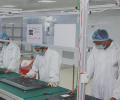
Dixon Technologies right now is a beehive of activity. It is building a new facility in Noida to make 1.3 million laptops for Taiwanese PC maker Acer. The facility must be up and running in four months. The pace of activity will only increase. Last week Dixon won a similar contract from Lenovo, the Chinese personal computer maker and the third largest information technology (IT) hardware brand in India, to assemble laptops and notebooks. Though the clientele in these two cases is Taiwanese and Chinese, Dixon is a company reaching for the stars with its feet planted firmly in the Indian government's policy.

While the market for satellite broadband currently is small, the potential is large as an estimated 30 per cent of the country does not have reliable terrestrial broadband services.

In outbound travel, India will be ahead of Italy, South Korea, Australia, Canada and France.

The rising goods and services tax (GST) and personal income-tax collections may bolster the Narendra Modi government's ability to announce new schemes or enhance existing ones.

The growth in India's domestic aviation capacity in calendar year 2023 (CY23) was the sixth highest among 20 major domestic markets, compared to the pre-pandemic year of CY19. The domestic capacity in the country surpassed the pre-pandemic level seen in CY19 and was up 5 per cent in CY23. It trails Mexico, Columbia, China, Vietnam, and Spain, which have shown higher growth, according to data shared in a seminar organised by global travel data provider OAG on global aviation trends in 2023.
 © 2025 Rediff.com - Investor Information - Advertise with us - Disclaimer - Privacy Policy - Sitemap - Feedback - About us - Terms of use - Grievances